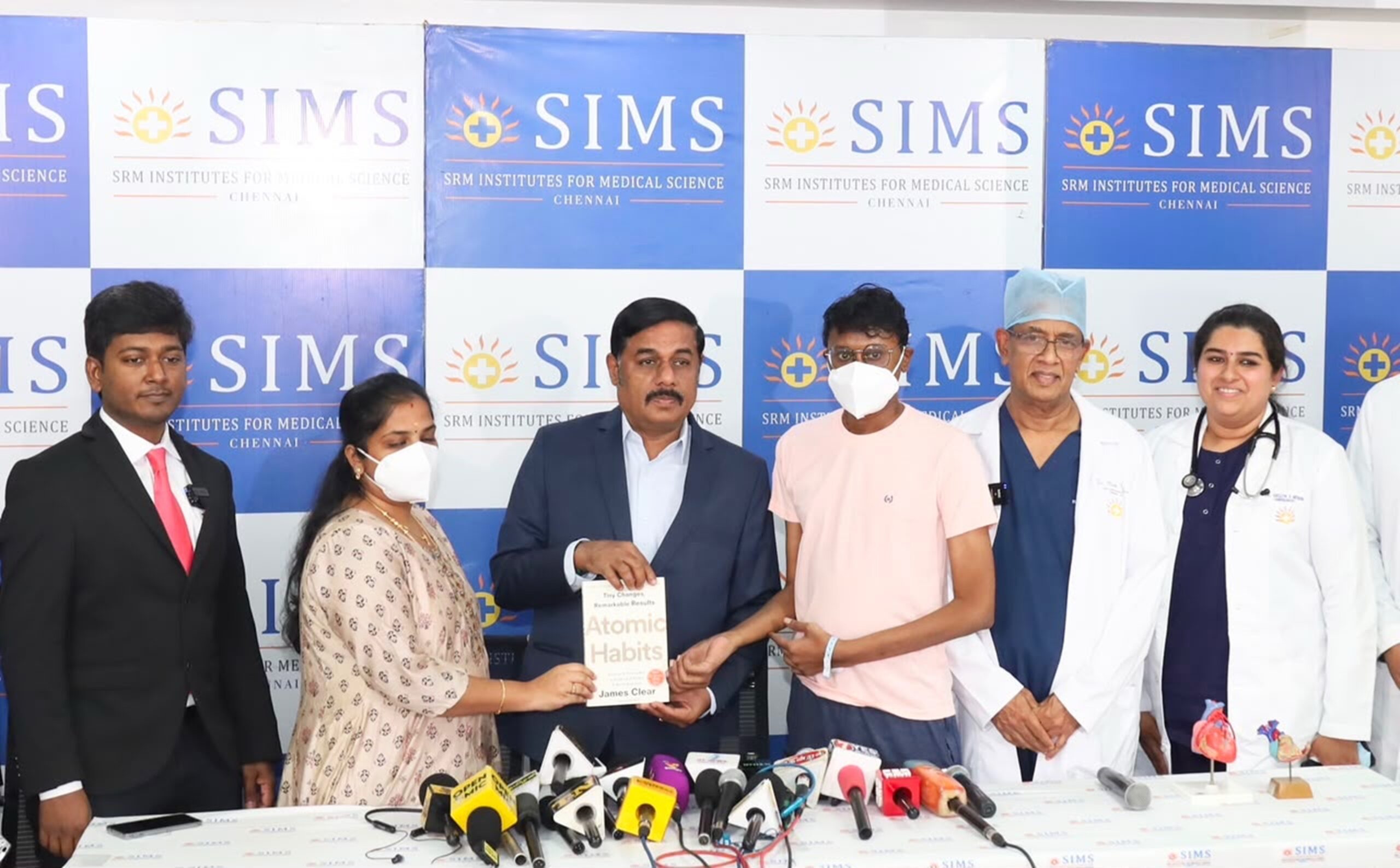
Chennai, August 12, 2026: SIMS Hospital gave a new lease of life to a 31-year-old with end-stage inherited heart diseases that progressed to a heart failure, through a successful heart transplantation procedure.
The donor heart, obtained from a 23-year-old brain dead patient, was transported to the hospital in just 20 minutes.
The patient from Puducherry had been experiencing severe breathing difficulties since February. However, he sought medical attention only when he was unable to lie flat on his back and his breathing problems began to interfere with his daily activities.
An echocardiogram (ECHO) revealed severe left ventricular dysfunction with heart failure. A cardiac MRI subsequently confirmed the diagnosis of dilated cardiomyopathy (DCM) with heart failure. In DCM, the heart muscle becomes enlarged and weakened, particularly the left ventricle, reducing the heart’s ability to pump blood effectively. Over time, this condition had progressed to heart failure.
Dilated cardiomyopathy is the most common type of cardiomyopathy. In this case, the condition was inherited from the patient’s father, who is also undergoing treatment for the disease. During his hospitalisation, the patient suffered a cardiac arrest but was successfully resuscitated and his condition was stabilised.
After deciding that heart transplantation was the best treatment option, the medical team listed the patient for a transplant and began searching for a suitable donor heart based on blood group compatibility, body weight, age, crossmatch results, and immune compatibility. A suitable donor heart became available through the state’s organ sharing network.
The transplant team reached the donor hospital early in the morning, and transported the donor heart to SIMS Hospital within 20 minutes. Meanwhile, another surgical team had already begun removing the patient’s diseased heart and placed the patient on cardiopulmonary bypass support, which temporarily took over the functions of the heart and lungs during the procedure. The transplant surgery was completed in approximately four hours.
Following the surgery, the patient was kept under intensive care monitoring for seven days.
The transplant team was led by Dr. Bashi, Chief Cardiac Surgeon and Director, ICAD, and comprised Dr. Rajeev Thilak Chellasamy, Heart Transplant Surgeon; Dr. Mohammed Ibrahim, Cardiac Surgeon; Dr. Shilpa Menon, Heart Failure Cardiologist; Dr. Aju Jacob, Chief Cardiac Anaesthetist; Dr. Arunkumar, Cardiac Anaesthetist; and Dr. Kishore, Cardiac Anaesthetist.
Commenting on the procedure, Dr. Bashi said, “For patients with end-stage heart failure, a heart transplant offers renewed hope when all other treatment options have been exhausted. A successful heart transplant requires seamless multidisciplinary collaboration and coordination. Dedicated co-ordinated efforts of the transplant team and the donor centre was ensured for swift transportation of the donor organ without a single moment waster. Surgeons, cardiologists, anaesthesiologists, transplant coordinators, nurses, and critical care teams work as one to transform the gift of organ donation into a new beginning for the recipient.”
Dr. Rajeev Thilak said, “Since the patient had suffered a cardiac arrest during hospitalisation, we meticulously planned every aspect of the transplant. Both the transportation of the donor heart and the transplant surgery were carried out with utmost precision and care. Following the surgery, the patient will require close monitoring for the next six months, as the risk of organ rejection is highest during this period.”
In her comments, Dr Shilpa Menon said, “The management of advanced heart failure extends far beyond transplantation. Every patient undergoes a comprehensive evaluation to determine the most appropriate treatment, which may include optimized medical therapy, device-based treatment, mechanical circulatory support or heart transplantation. A multidisciplinary approach is essential to achieving the best possible outcomes.”
Dr. Ravi Pachamuthu, Chairman, SRM Group, said, “This successful heart transplant reflects our commitment to advancing specialised cardiac care and providing patients access to complex, life-saving treatments. The achievement was made possible by the dedication of our cardiac specialists, surgeons, anaesthetists, transplant coordinators, nurses and support teams. At SIMS Hospital, we remain committed to strengthening advanced medical capabilities and clinical expertise, enabling patients to access complex treatments closer to home.”
Heart failure, especially in younger adults, severely affects quality of life and often requires frequent hospitalizations. It can also significantly limit their ability to work, pursue daily activities, and lead an active, independent life. Early diagnosis, timely medical management, lifestyle modifications, and regular follow-up are essential to control symptoms, prevent disease progression, and improve quality of life.